You’ve had the colonoscopies. You’ve tried elimination diets, probiotics, prescription medications. Your gastroenterologist has ruled out everything structural—and yet your gut still has a mind of its own. Cramping without warning, urgent bathroom trips, bloating that makes you cancel plans. Living with irritable bowel syndrome isn’t just physically exhausting. It quietly dismantles your confidence in your own body.
What many IBS sufferers don’t realize is that the gut and the brain are in constant, direct conversation. And for a condition that lives at that intersection, hypnotherapy has accumulated some of the strongest clinical evidence of any non-pharmacological treatment available.
What Is IBS, and Why Is It So Hard to Treat?
Irritable bowel syndrome is a functional gastrointestinal disorder characterized by recurring abdominal pain, bloating, and altered bowel habits—diarrhea, constipation, or both. It affects an estimated 10 to 15% of adults worldwide (American College of Gastroenterology, 2021), making it one of the most common reasons people seek medical care.
What makes IBS frustrating to manage is that there’s no single identifiable cause and no universal cure. Standard treatments—dietary changes, antispasmodics, antidepressants, fiber supplements—help some people some of the time. But a significant percentage of IBS sufferers continue to experience symptoms even after following all recommended protocols.
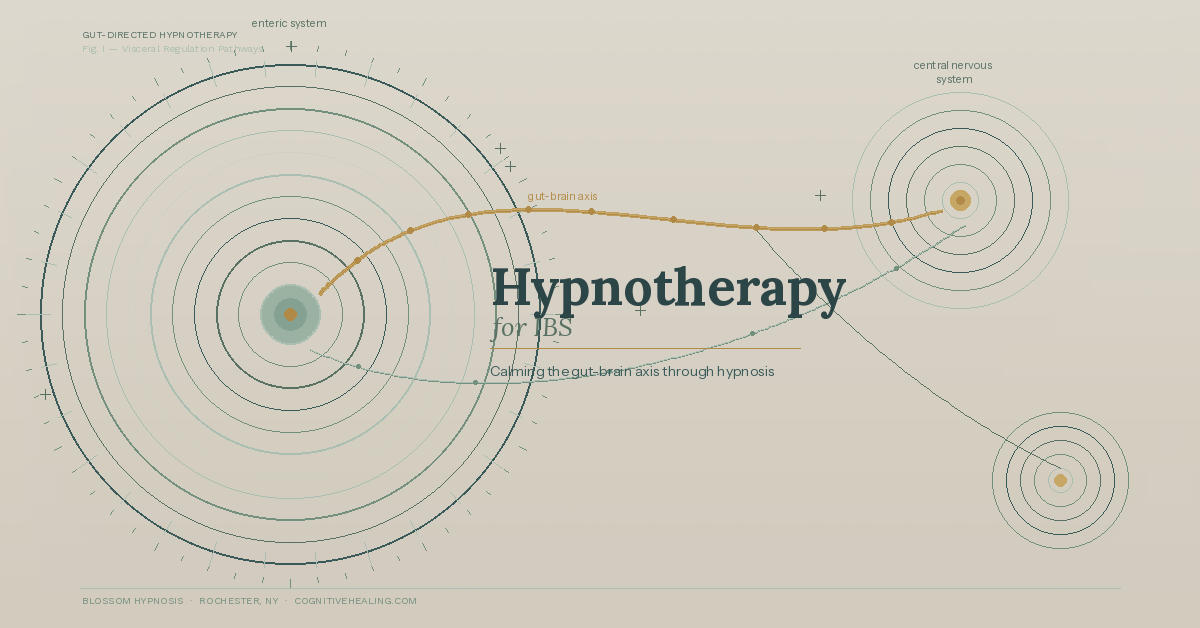
That’s because IBS isn’t simply a gut problem. It’s a disorder of the gut-brain axis: the bidirectional communication network between the central nervous system and the enteric nervous system (the “second brain” residing in the gut wall). When this communication breaks down or becomes hypersensitive, the gut overreacts to signals that shouldn’t register as threatening—and symptoms follow.
The Gut-Brain Connection: Why the Mind Matters
Stress, anxiety, and emotional overwhelm don’t just affect your mood. They alter gut motility, increase intestinal permeability, and amplify pain signals. People with IBS consistently show heightened visceral hypersensitivity: their intestines respond to normal amounts of gas and movement with a level of pain that others simply don’t experience.
This is not a character flaw or “all in your head.” It’s a measurable neurological pattern. The gut contains over 100 million nerve cells—more than the spinal cord—and produces roughly 95% of the body’s serotonin, the neurotransmitter that regulates mood, digestion, and pain perception. When the nervous system is chronically activated by stress, the gut feels it directly.
This is precisely why therapies that address the nervous system—rather than just the digestive tract—can be so effective for IBS.
What Is Gut-Directed Hypnotherapy?
Gut-directed hypnotherapy is a specialized form of hypnosis developed specifically to treat IBS. Unlike general relaxation hypnosis, it targets the gut-brain relationship directly: using guided imagery, suggestion, and deep relaxation to calm the hypersensitive pain pathways connecting the brain and the intestines.
During a session, the client enters a deeply relaxed state and receives carefully constructed suggestions—often involving imagery of warmth, calm, and normalized gut function. Over time, these suggestions help retrain the nervous system’s response to intestinal sensations, reducing both the frequency and intensity of symptoms.
The most well-researched protocol is the Manchester Protocol, developed by Professor Peter Whorwell at the University of Manchester in the 1980s. It consists of 12 sessions over 3 months and has been replicated successfully across multiple clinical settings worldwide.
What Does the Research Say?
Gut-directed hypnotherapy is one of the few IBS treatments with decades of controlled clinical research behind it. The evidence is substantial.
- Professor Whorwell’s original trial, published in The Lancet (1984), found that hypnotherapy produced significantly greater improvements in abdominal pain, bowel habit, and overall wellbeing than standard medical care and supportive therapy combined.
- A 2006 long-term follow-up study found that 81% of IBS patients who responded to hypnotherapy maintained their improvement for up to 5 years after treatment, with many reporting continued gains over time.
- A meta-analysis in The American Journal of Gastroenterology (2019) reviewed 8 randomized controlled trials and concluded that gut-directed hypnotherapy was more effective than both waitlist control and other psychological therapies for improving global IBS symptoms and quality of life.
- The UK’s National Institute for Health and Care Excellence (NICE) now lists psychological therapies including gut-directed hypnotherapy as a recommended treatment option for IBS that has not responded adequately to pharmacological management.
These aren’t fringe findings. This is a treatment that has earned a place in mainstream gastroenterology guidelines.
How Hypnotherapy Helps IBS: The Mechanisms
Hypnotherapy addresses IBS through several overlapping pathways.
1. Calming the Nervous System
The deeply relaxed state of hypnosis shifts the body from sympathetic (fight-or-flight) activation to parasympathetic (rest-and-digest) dominance. For people with IBS, whose nervous systems are often stuck in a state of low-grade alert, this shift alone can reduce gut reactivity.
2. Reducing Visceral Hypersensitivity
Specific hypnotic suggestions can alter how the brain interprets pain signals from the gut. Brain imaging studies show that hypnosis modifies activity in the anterior cingulate cortex and insula—areas responsible for processing pain and visceral sensation—producing genuine neurological changes rather than simply masking discomfort.
3. Addressing the Anxiety-IBS Cycle
Anxiety worsens IBS. IBS worsens anxiety. Hypnotherapy breaks into this cycle by reducing overall anxiety levels, helping clients develop a more neutral, less fearful relationship with their gut sensations. When the body stops anticipating pain with dread, the pain often diminishes.
4. Building a New Relationship with the Body
Many IBS sufferers develop a fraught, adversarial relationship with their own digestive system. Hypnotherapy uses positive imagery—often visualizing the gut as calm, smooth, and comfortable—to rebuild a sense of safety and trust in the body.
What to Expect in a Hypnotherapy Session for IBS
A typical gut-directed hypnotherapy session begins with a guided induction: a process of progressive relaxation that moves the client into a focused, receptive state. From there, the therapist introduces specific suggestions and imagery tailored to IBS, often including:
- Imagery of warmth and comfort moving through the abdomen
- Suggestions that intestinal muscles are relaxed and functioning at an easy, comfortable rhythm
- Techniques for managing any anticipatory anxiety around symptoms or social situations
- Self-hypnosis scripts the client can practice independently between sessions
Sessions are typically 45 to 60 minutes. Most protocols recommend 6 to 12 sessions for meaningful, lasting improvement. Many clients notice a reduction in symptom frequency and anxiety around their symptoms within the first 3 to 4 sessions.
Addressing Common Questions About Hypnotherapy for IBS
“I’m worried about losing control or being made to do something.”
Therapeutic hypnosis is nothing like stage hypnosis. You remain conscious and aware throughout the session. You cannot be made to say or do anything against your will. The state is closer to focused absorption—like being deep in a book—than to sleep or unconsciousness.
“My IBS is physical. How can a mental approach help?”
IBS is physical and it’s rooted in a dysregulated nervous system. Gut-directed hypnotherapy works precisely because it targets the neurological pathways governing gut function, not just the psychological experience of distress. The fact that it’s mind-based doesn’t make its effects less real—brain imaging confirms measurable changes in gut-related brain activity.
“I’ve tried everything. What makes this different?”
Most IBS treatments focus on the gut in isolation. Hypnotherapy addresses the gut-brain communication system that drives hypersensitivity in the first place. For patients who haven’t responded to dietary changes or medication, this different angle of intervention often produces results when nothing else has.
“Will I need to do this forever?”
The research suggests not. Follow-up studies consistently show that benefits from gut-directed hypnotherapy are durable—often maintained for years after the conclusion of treatment. Many clients continue to practice self-hypnosis techniques independently, which helps sustain results.
Who Is Gut-Directed Hypnotherapy Best Suited For?
Hypnotherapy for IBS tends to be most effective for people who:
- Have been formally diagnosed with IBS by a physician and ruled out other conditions
- Experience significant stress, anxiety, or emotional triggers for their symptoms
- Have tried dietary and pharmacological approaches with limited success
- Are motivated and open to a mind-body treatment approach
It can be used alongside other treatments—medication, dietary management, probiotics—rather than as a replacement for them. A qualified hypnotherapist will work in collaboration with your gastroenterologist or primary care physician as appropriate.
Research Highlights
- A study in Alimentary Pharmacology & Therapeutics (2002) found that 71% of IBS patients who completed a course of gut-directed hypnotherapy reported significant symptom improvement, compared to 43% in the control group.
- Research published in Gut (2003) demonstrated that hypnotherapy improved not only bowel symptoms but also psychological wellbeing, quality of life, and anxiety scores—with effects maintained at 1-year follow-up.
- A 2020 randomized controlled trial in The Lancet Gastroenterology & Hepatology found that both in-person and home-based self-hypnotherapy produced comparable symptom reduction, suggesting that the approach can be adapted for different access needs.
- Brain imaging research (University of Manchester, 2022) confirmed that gut-directed hypnotherapy produces measurable reductions in gut-brain hypersensitivity pathways, providing neurological confirmation of what patients consistently report.
Moving Toward Relief
Living with IBS means managing uncertainty every day—not knowing when symptoms will strike, gradually narrowing your world to avoid triggers, learning to plan everything around your gut. It’s exhausting. And it’s isolating in a way that’s hard to explain to people who haven’t experienced it.
Hypnotherapy doesn’t promise to eliminate IBS overnight. What it offers is a clinically supported path toward retraining the gut-brain relationship that drives hypersensitivity—helping your nervous system find its way back to a calmer baseline, so your gut can follow.
If you’ve worked through the standard IBS playbook without finding lasting relief, this approach is worth exploring. The research is solid. The results, for many people, are significant.
Reflection question: If the communication between your brain and gut could be gently recalibrated—the alarm turned down, the sensitivity dialed back—what might become possible again?
At Blossom Hypnosis in Rochester, NY, we work with adults experiencing IBS and stress-related digestive conditions using gut-directed hypnotherapy and evidence-based mind-body approaches.
Ready to explore whether hypnotherapy can help your IBS? Book a Free Consultation →

Be First to Comment