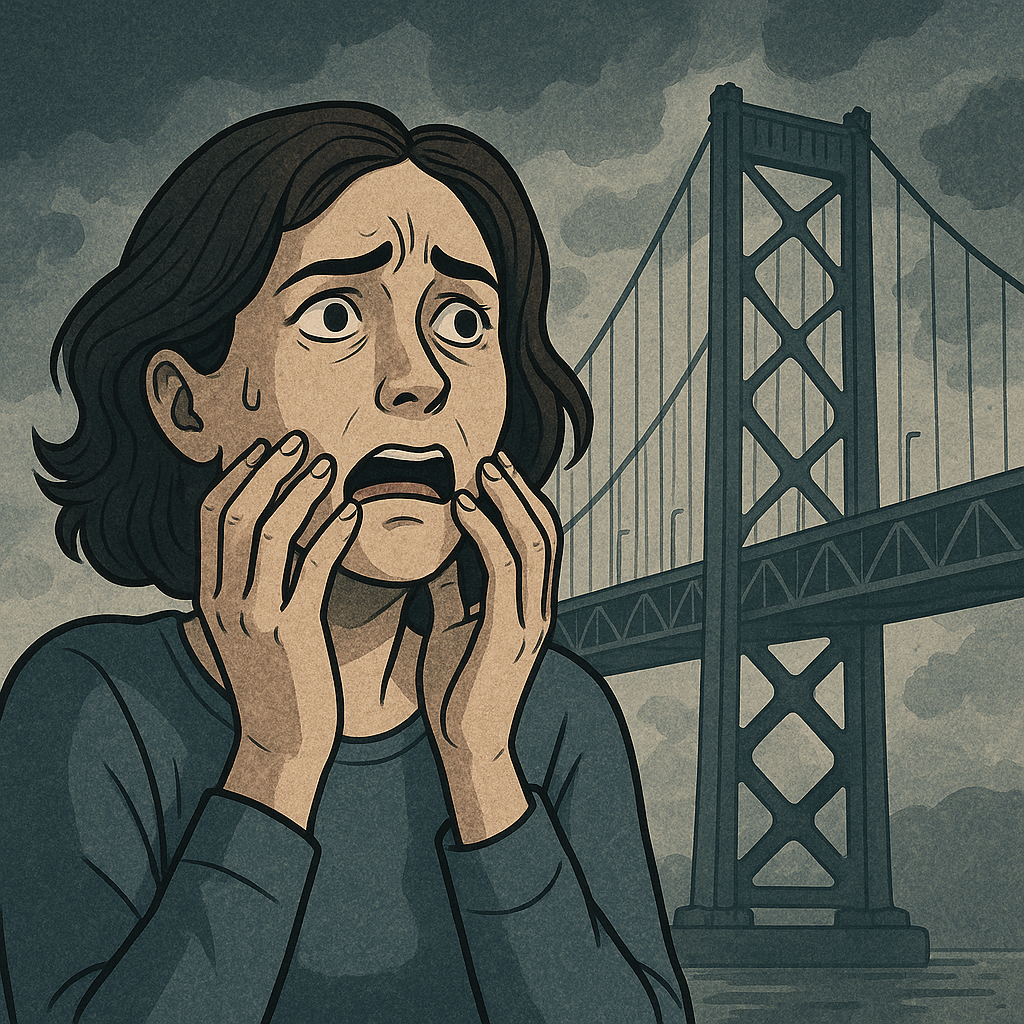
For many people, crossing a bridge is an ordinary part of daily life. Yet for some, bridges evoke intense fear and distress. Known as gephyrophobia, the fear of bridges is a specific phobia that can significantly interfere with daily routines, travel, and overall quality of life. Whether triggered by concerns about height, collapse, or feeling trapped, this phobia can provoke severe anxiety and impact mental well-being.
Research suggests that specific phobias affect around 7–9% of adults in the United States each year, with fears related to travel and environmental situations being particularly common (American Psychiatric Association, 2013). While gephyrophobia is less frequently discussed than fears such as flying or enclosed spaces, its consequences are no less serious.
The Psychological Toll of Fear of Bridges
Living with gephyrophobia can affect mental health in several ways:
- Chronic Anxiety – Even the anticipation of crossing a bridge can provoke panic attacks, shortness of breath, dizziness, or heart palpitations. This constant state of hypervigilance often leads to generalized anxiety symptoms.
- Avoidance Behaviors – Individuals may go to great lengths to avoid bridges, often rerouting travel or even refusing opportunities for work or leisure that require crossing one. Over time, this avoidance reinforces fear and restricts freedom.
- Depression and Isolation – Avoidance can cause individuals to withdraw socially or professionally, contributing to loneliness, low mood, and diminished self-esteem. Studies on specific phobias show that up to 30% of sufferers also meet criteria for depression (Kessler et al., 2005).
- Impaired Self-Confidence – Repeatedly feeling “trapped” by fear can create a cycle of self-doubt and perceived helplessness, further intensifying distress.
Distinct Mental Health Challenges
Patients who struggle with fear of bridges face unique difficulties compared to other phobias:
- Loss of Autonomy – Because bridges are often unavoidable in certain regions, individuals may feel controlled by their phobia.
- Impact on Career Mobility – Those who commute in bridge-heavy cities may face missed job opportunities or workplace stress.
- Family and Relationship Strain – Loved ones may find it challenging to accommodate avoidance behaviors, creating tension or misunderstanding.
- Physical Health Effects – Chronic anxiety related to bridge crossings can elevate cortisol levels, increasing risks for hypertension and cardiovascular strain.
Practical Strategies for Managing Fear of Bridges
Addressing gephyrophobia often requires a multi-pronged approach:
- Gradual Exposure – Under professional guidance, individuals can slowly build tolerance by starting with images or videos of bridges, then progressing to short crossings.
- Cognitive Behavioral Techniques – Identifying and restructuring catastrophic thoughts (“the bridge will collapse”) helps reduce irrational fear.
- Relaxation Practices – Deep breathing, progressive muscle relaxation, and mindfulness can calm the body before and during exposure.
- Support Systems – Talking openly with friends, family, or support groups normalizes the experience and reduces shame.
The Role of Hypnotherapy
Hypnotherapy is a powerful complementary tool for addressing fears like gephyrophobia. By guiding individuals into a deeply relaxed, focused state, hypnotherapy helps uncover subconscious associations and reframe automatic fear responses.
Benefits of Hypnotherapy for Fear of Bridges
- Access to Subconscious Beliefs – Many fears stem from early experiences or ingrained thought patterns. Hypnotherapy can help patients reprocess these memories in a safe way.
- Calm Response Training – Through visualization, individuals can mentally “practice” crossing bridges in a calm, confident state.
- Reduction of Anticipatory Anxiety – Hypnotherapy provides coping scripts and anchors that clients can use before or during bridge crossings.
Clinical evidence supports its value. A meta-analysis in the International Journal of Clinical and Experimental Hypnosis (2019) found that hypnotherapy, when combined with cognitive-behavioral approaches, significantly improved outcomes for individuals with phobias.
Addressing Common Objections to Hypnotherapy
Despite its effectiveness, hypnotherapy is sometimes misunderstood. Let’s address common concerns:
- “Hypnotherapy isn’t scientifically valid.”
In reality, numerous controlled trials support hypnosis as an adjunct treatment for phobias, anxiety, and pain management. Professional organizations like the American Psychological Association recognize hypnotherapy as a legitimate therapeutic practice. - “I’ll lose control during hypnosis.”
Clients remain fully aware and in control during hypnotherapy. Rather than “mind control,” hypnosis is a state of focused relaxation where the client collaborates with the therapist. - “Results won’t last.”
When paired with other therapeutic strategies, hypnotherapy provides long-term coping mechanisms. A 2016 study in Contemporary Hypnosis & Integrative Therapy showed lasting reductions in phobia severity up to one year after treatment.
Integrating Hypnotherapy into a Broader Mental Health Strategy
For best outcomes, hypnotherapy is most effective when integrated with:
- Cognitive-behavioral therapy (CBT)
- Gradual exposure techniques
- Lifestyle changes supporting resilience (exercise, nutrition, sleep hygiene)
- Professional counseling and support networks
This holistic approach empowers individuals not only to overcome fear but also to rebuild confidence and restore independence.
Case Study for Treating Fear of Bridges
I had a client who had a phobia of bridges and some other mental health issues like Generalized anxiety disorder, Depression, and PTSD. I did an intake about a year ago on this 54 years old male client. He reportedly lived in a dysfunctional family and had several mental health issues caused by his non nurturing and abusive step parents. As a result, he was not able to function properly as an adult. Upon doing the comprehensive evaluation, I identified the issues where he needed help.
The most pressing and crucial issue was PTSD so I gave him three sessions of trauma release. He was physically abused by his step father and step mother from age 6-12. I did sessions like PTSD relaxation, Negative memory release, Emotional Baggage, Tuning into Emotions, Emotional calmness visualization, and Survivors of trauma. The client felt relieved after these three sessions and then I focused on his Depression issue. For Depression, I did two sessions and used the scripts White light relaxation, Depression relaxation, Silver Sack Negativity, Living in the Now and many more.
Gradually, his depression was lifted and he was ready to work on his phobia of bridges. It was very important to release his phobia using the Neuro linguistic programming technique in which he visualized the scenes of the event that caused him to develop phobia. Then he was supposed to rewind the scenes from the very end to beginning and his phobia was released by this technique. Thereafter, I did sessions like Letting go of fear and phobias, Fear of death, Fear of the Unknown, and Fear of Bridges.
Once the phobia sessions were completed, I did work on his confidence building because many of the Anxiety disorders tend to damage the person’s self esteem and confidence. I did several sessions on building up his self esteem and did sessions like Increased self esteem. Personal Confidence, Personal Pride, Dial Up Confidence, Empower yourself and many more.
I offered a total of two sessions of self esteem and by this time, he was driving on bridges very confidently with no trace of phobia. I discharged him and did four weekly follow ups via text message. He continued to be anxiety free and had no trouble walking and driving on bridges. He had no signs of relapse. In this way, we see that hypnosis is a very safe and effective method to address phobias. I have effectively treated multiple types of phobias with the help of Hypnosis
Conclusion and Resources
Fear of bridges is more than an inconvenience—it is a mental health challenge that can erode confidence, limit opportunities, and strain relationships. With effective strategies, including hypnotherapy, individuals can reclaim freedom and ease in their daily lives.
If you or someone you love struggles with gephyrophobia, remember that support is available. Professional hypnotherapy, combined with evidence-based approaches, offers a safe and effective path to healing.
Resources for Further Reading:
- American Psychiatric Association. Diagnostic and Statistical Manual of Mental Disorders (DSM-5).
- Kessler RC et al. “Lifetime prevalence and age-of-onset distributions of DSM-IV disorders.” Archives of General Psychiatry, 2005.
- International Journal of Clinical and Experimental Hypnosis (2019).
- Contemporary Hypnosis & Integrative Therapy (2016).
Contact us for a free consultation. Not ready to schedule an appointment? Learn how self-hypnosis can start your recovery from PTSD and depression.

Be First to Comment