
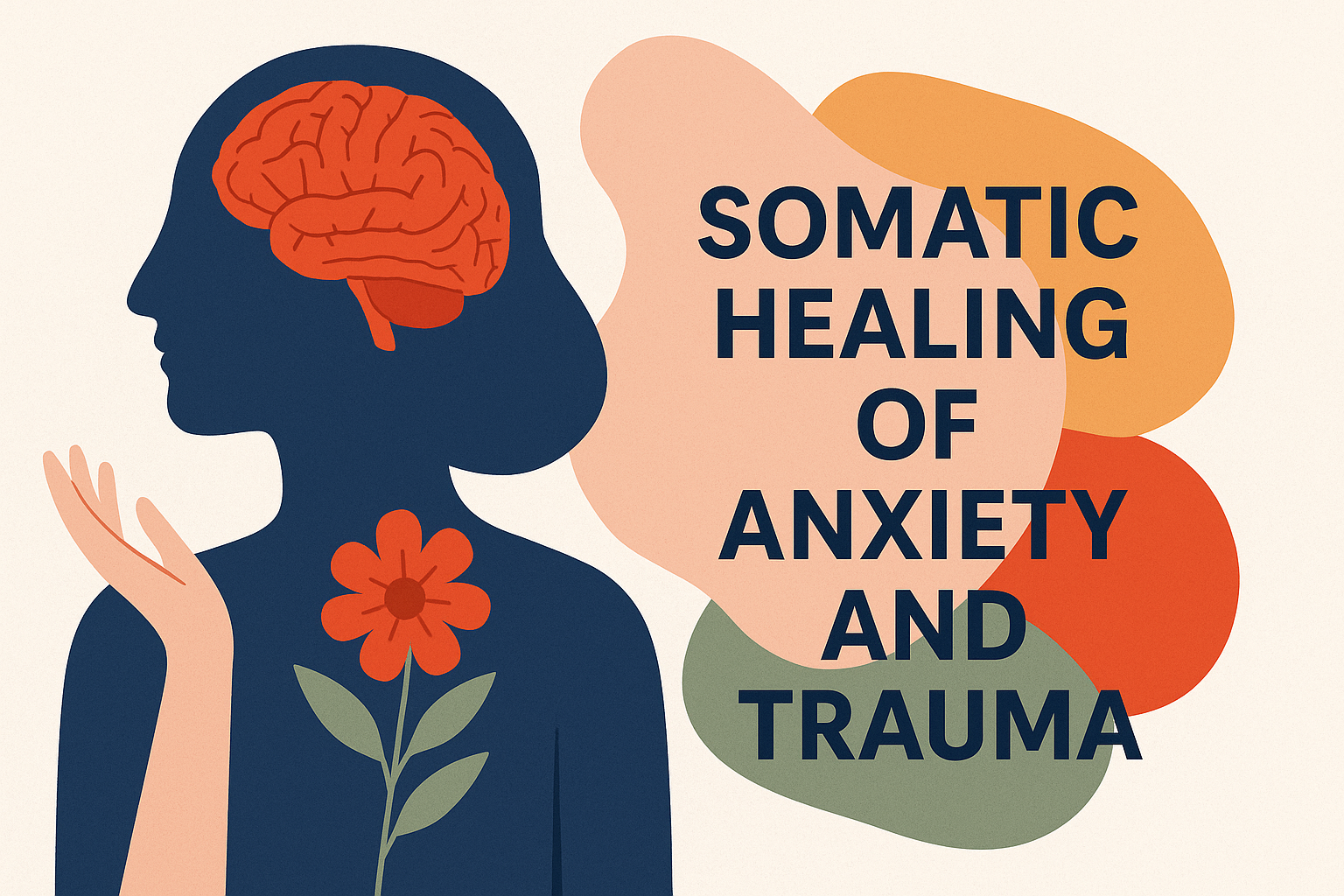
Emotional trauma and anxiety leave more than invisible wounds—they live within the body. For many people, the effects of past trauma or chronic stress are not just psychological but deeply physical, shaping how the nervous system responds to daily life. Somatic healing offers a path to recovery that acknowledges this body–mind connection, helping individuals release stored tension and emotional pain.
In an age where anxiety disorders affect over 40 million adults in the United States (National Institute of Mental Health, 2024), and trauma-related conditions such as PTSD impact nearly 6% of the population (American Psychiatric Association, 2023), the need for body-centered approaches has never been greater.
Understanding Somatic Healing
Somatic healing is a therapeutic approach that integrates the body into the process of emotional recovery. The word somatic comes from the Greek soma, meaning “body.” This method is based on the understanding that the body holds onto experiences, emotions, and stress patterns—even when the mind has consciously moved on.
Pioneers such as Dr. Peter Levine, the founder of Somatic Experiencing, have shown that trauma often becomes “trapped” in the body’s nervous system. Somatic techniques help individuals gently release these stored responses through body awareness, grounding exercises, breathwork, and mindful movement.
Rather than focusing solely on cognitive processing or verbal therapy, somatic healing reconnects people with physical sensations, allowing the nervous system to complete its natural cycles of stress and regulation.
How Anxiety and Trauma Affect the Body and Mind
Both anxiety and trauma fundamentally alter how the brain and body communicate. Chronic activation of the sympathetic nervous system—the body’s “fight or flight” response—can lead to persistent physical tension, sleep disturbances, and emotional dysregulation.
Common Mental Health Challenges Include:
- Hypervigilance and restlessness – The body remains on high alert, making it difficult to relax or feel safe.
- Emotional numbing – To protect itself, the brain may dampen emotional responses, leading to detachment or apathy.
- Panic and intrusive memories – Sudden physiological responses (racing heart, sweating, dizziness) may accompany flashbacks or anxiety attacks.
- Low self-esteem and guilt – Survivors of trauma often internalize blame or feel “broken,” undermining confidence and relationships.
- Chronic physical pain – Studies show trauma survivors have higher rates of fibromyalgia, migraines, and gastrointestinal distress (van der Kolk, The Body Keeps the Score, 2014).
These symptoms create a feedback loop: the more the body remains tense and alert, the more the mind perceives threat—prolonging anxiety and emotional pain.
Somatic Healing Techniques for Anxiety and Trauma
Somatic healing offers a gentle, integrative approach to breaking that cycle. Below are several evidence-based practices that help regulate the nervous system and restore a sense of safety in the body.
1. Grounding Exercises
Grounding helps individuals reconnect with the present moment through sensory awareness—feeling the floor beneath their feet or focusing on breathing. These exercises interrupt panic and dissociation by anchoring awareness in the body.
2. Body Scanning and Breath Awareness
By scanning the body from head to toe and noticing areas of tension, clients begin to identify where anxiety “lives.” Deep, diaphragmatic breathing activates the parasympathetic nervous system, reducing cortisol and heart rate.
3. Tremoring and Movement
Somatic practices sometimes involve gentle shaking or stretching movements to release muscular tension. Research in Frontiers in Psychology (2020) found that therapeutic tremoring improved stress resilience and emotional regulation in trauma survivors.
4. Touch and Self-Regulation
Safe, intentional touch—such as placing a hand on the heart—can signal safety to the nervous system, supporting the process of self-soothing and emotional grounding.
The Role of Hypnotherapy in Somatic Healing
Hypnotherapy complements somatic approaches by accessing the subconscious mind, where emotional memories and automatic responses are stored. While somatic therapy works “from the body up,” hypnotherapy works “from the mind down,” helping to reprogram limiting beliefs and calm the nervous system’s stress responses.
How Hypnotherapy Helps:
- Releases stored trauma: Guided imagery and regression under hypnosis can help reframe distressing memories in a safe, controlled environment.
- Regulates physiological responses: Hypnotic suggestion promotes deep relaxation, lowering blood pressure and reducing physical symptoms of anxiety.
- Builds self-efficacy and confidence: Hypnosis strengthens positive internal dialogue, helping clients regain a sense of control and resilience.
A 2022 meta-analysis published in the American Journal of Clinical Hypnosis found that hypnotherapy significantly reduced symptoms of post-traumatic stress and anxiety when integrated with traditional psychotherapy or somatic methods.
Addressing Common Objections to Hypnotherapy
Despite growing research support, some individuals remain skeptical about hypnotherapy. Let’s address a few common concerns.
1. “I’m afraid I’ll lose control.”
Hypnosis is not mind control. In therapeutic hypnosis, clients remain conscious and aware at all times. The goal is heightened focus—not submission. You cannot be made to say or do anything against your will.
2. “It doesn’t seem scientific.”
In fact, modern hypnotherapy is an evidence-based practice recognized by both the American Psychological Association and the British Medical Association. Studies have demonstrated its effectiveness for anxiety, chronic pain, IBS, and trauma-related conditions.
3. “It’s just relaxation or placebo.”
While relaxation is part of hypnosis, brain imaging studies using fMRI (Stanford University, 2016) show measurable changes in areas associated with attention, emotion regulation, and sensory processing—indicating genuine neurological shifts.
4. “It won’t work for me.”
Everyone can experience hypnosis, though depth varies. A skilled hypnotherapist tailors sessions to your level of responsiveness, combining hypnosis with somatic or cognitive techniques for optimal results.
Integrating Hypnotherapy into a Holistic Recovery Plan
Effective trauma and anxiety recovery often requires a multi-modal approach. Hypnotherapy can be integrated alongside:
- Somatic experiencing or EMDR therapy
- Cognitive-behavioral therapy (CBT)
- Mindfulness-based stress reduction (MBSR)
- Gentle movement practices like yoga or tai chi
- Adequate sleep, nutrition, and social support
Together, these modalities help retrain the nervous system, promote emotional resilience, and restore a sense of inner balance.
Case study for Treating Anxiety and Trauma with Hypnosis
As mentioned earlier, anxiety and trauma both are associated with somatic complications. I have had the experience of treating multiple clients who needed somatic healing because of the diagnoses of Post Traumatic Stress Disorder (PTSD) and Anxiety.
One example comes to mind of a client who had endured significant trauma from Rape, sexual abuse by her boy friend and physical abuse by parents. She presented with a significant amount of anxiety and trauma issues. She had Post Traumatic Stress Disorder and severe Generalized Anxiety Disorder. She was on disability for these issues and her functioning level was severely impacted.
I did a comprehensive assessment of her about a year ago and identified areas of issues that needed to be addressed in treatment. I started with the issue of trauma and did sessions like PTSD Relaxation, Emotional baggage, Negative memory release and Flashbacks relaxation. She was also given audio files for these sessions that she used in between her two therapy sessions to reinforce the suggestions embedded during the live sessions. Additionally, I also did sessions like Dealing with the aftermath of Rape, Feeling Stuck, Forgiveness and Tuning into Emotions.
Subsequently, I addressed her symptoms of Generalized Anxiety Disorder. For this, I did sessions like Anxiety Release, Blow Away Stress, Unwanted Thoughts Relaxation, and Worrying. Subsequently, I did sessions like, Stress and Anger Release, Stress relief, Fear of abandonment, Stress Management, Stress relief and Stress using the imagery of candle flame. Client learned how to relax her body and mind using these stress management techniques along with the hypnotic anchors.
Since most of the individuals suffering from Anxiety disorders lack confidence and have low self esteem, I offered sessions like Dial up Confidence, Circle of Confidence, Personal Pride, Personal Session, Increased Self Esteem, and Confidence Building. The client also presented with symptoms of depression and needed some help to lift up her depression so I did sessions like White light Relaxation, Negative Emotions Release, Negative Thoughts Release, and Silver Sack Negativity. Imageries of balloon and puddle were introduced during the hypnosis session.
As a result of the above intervention and comprehensive treatment with hypnosis, my client made significant progress. Within four sessions of PTSD, she felt a relief and began to function normally. She was no longer dwelling in the past and getting flashbacks. She felt lighter and began to enjoy social interactions more.
After the sessions of Anxiety/ Stress and Self Esteem, her functioning level further improved. She began to engage in recreational activities.
Lastly, after the sessions of Depression, she showed further improvement and started to feel she was ready for discharge. The somatic healing took place and she no longer felt fight or flight symptoms. After twelve sessions of hypnosis, I discharged her and did follow up for four weeks. She continued to do good and had no signs of relapse. She thanked me for her recovery. Furthermore, the client’s PCP was happy to see her progress. I congratulated her on her achievement and closed her case.
We see that hypnosis can be quite instrumental in promoting somatic healing to clients diagnosed with PTSD and Generalized Anxiety Disorder.
Evidence and Research Highlights
- A study in Psychotherapy Research (2023) found that combining somatic techniques with hypnotherapy reduced trauma symptoms by 48% over 12 weeks.
- The Journal of Anxiety Disorders (2022) reported that patients receiving hypnosis-based relaxation therapy experienced a 35% greater improvement in anxiety levels compared to standard treatment.
- Neuroscientific research shows that hypnotherapy increases activity in the anterior cingulate cortex, a region involved in emotional regulation and cognitive control (Hoeft et al., Cerebral Cortex, 2016).
These findings affirm that both somatic healing and hypnotherapy can bring measurable, lasting changes in how the brain and body process stress and emotion.
Moving Toward Healing
Somatic healing reminds us that recovery isn’t only a matter of “thinking differently”—it’s about feeling safe in our own bodies again. By integrating hypnotherapy with body-centered awareness, individuals can release old trauma, reprogram anxious responses, and rediscover peace.
If you or someone you know is struggling with anxiety or trauma, consider consulting a certified hypnotherapist trained in somatic techniques. Healing is not about forgetting the past—it’s about reclaiming your present.
Resources for Further Reading
- Levine, Peter A. Waking the Tiger: Healing Trauma. North Atlantic Books, 1997.
- van der Kolk, Bessel. The Body Keeps the Score. Penguin Books, 2014.
- American Society of Clinical Hypnosis (ASCH) – www.asch.net
- National Center for Complementary and Integrative Health (NCCIH) – nccih.nih.gov
Need guidance? Blossom Hypnosis offers personalized hypnotherapy and cognitive-based support tailored to trauma recovery. Start here.

Be First to Comment